Saudi Arabia's Awakening Shakyhs: Where are they Today?
by Richard Smith
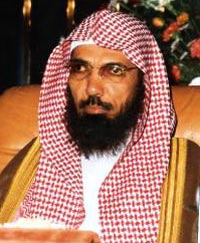
Ayidh bin Abdallah bin Ayidh al-Qurni
Safar bin Abd al-Rahman bin Ahmad al-Hawali
Salman bin Fahd bin Abdallah al-Awdah
The 1990s brought a younger generation of Muslim shaykhs into the forefront of Saudi society and sometimes into direct conflict with the royal family. Many of these shaykhs were graduates of the Islamic university system and had become frustrated with their perceived lack of influence over the country's direction. (Most of the Kingdom's key policy making positions were still in the hands of the royal family and Western-trained technocrats.) Others harbored concerns that the royal family was deviating from Islamic principles and relying too heavily on the non-Muslim West for the Kingdom's defense and economic development. In addition to expressing anti-Western sentiments, many Awakening shaykhs also criticized the large number of non-Saudi and particularly non-Muslim laborers in the kingdom as well as antipathy towards the kingdom's minority Shia Muslim sect.
These concerns erupted into the open during the 1991 Iraq war, which brought thousands of Western troops into the Kingdom and underscored the Al Saud's dependence on the United States. Called the Sahwah, or "Awakening" this movement expressed open hostility of the West, and by implication, criticism of the Al Saud's relationship to Washington. A handful of Awakening shaykhs were able to circumvent the government controlled media and build a following through the use of Islamic cassette tapes and lectures at mosques and schools where the religious community exerted considerable day-to-day control.
The Triumverate
While there were perhaps a dozen well known Awakening shaykhs, three rose to national prominence.
Salman al-Awdah: The AnalystSalman bin Fahd bin Abdallah al-Awadah, rose to become become the Awakening's senior political analyst. Al-Awdah was born and raised in the Qassim province, the kingdom's religious heartland. This pedigree alone was enough to give him some credibility within the Saudi religious community. A graduate of Imam Muhammad University, al-Awdah worked as a lecturer within the university system. al-Awadah is well known for his methodical, analytic fashion of his lectures and cassette tape sermons.
Safar al-Hawali: The WriterA graduate and professor at Umm al-Qura University in Mecca, Safar al-Hawali is one of the most prolific writers of the Awakening shaykhs. Much of his early writings focused on Western secularism and the dangers he believes this ideology posed to the Muslim world. His doctoral thesis, titled "Securlarism" was later published as a book. His early sermons included calls for the boycott of American-made products, an end to what he saw as a Saudi oil policy that is concessionary to the West, and banning the teaching of English in Saudi schools.
Ayidh al-Qurni: The CommedianAnother of the popular cassette tape shaykhs, Shaykh Ayidh al-Qurni became known for his travel journal, America as I saw it. In the lecture, Qurni relates personal experiences from his visit to the U.S.--part of a educational mission to visit with Saudi students abroad--in the early 1990s. The image of America he conveys to his listeners is a country of rampant materialism, crime, where people engage in public sex and abandon their parents to prison-like nursing homes. Born in Abha, Qurni earned an MA degree from Imam Muhammad University in 1988.
30 Ramadan 1442 / 2021 Makkah Tahajud - Sheikh Saud Shuraim
Day 29 - Ramadan 1442 / 2021 Makkah Taraweeh - Sheikh Bandar Balila
Day 28 - Ramadan 1442 / 2021 Makkah Taraweeh - Sheikh Bandar Balila
Day 27 - Ramadan 1442 / 2021 Makkah Taraweeh - Sheikh Bandar Balila
Day 26 - Ramadan 1442 / 2021 Makkah Taraweeh - Sheikh Bandar Balila
Day 25 - Ramadan 1442 / 2021 Makkah Taraweeh - Sheikh Bandar Balila